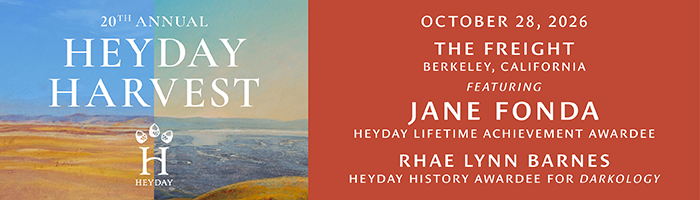

Terria Smith and Ursula Pike at Portland Literary Arts

Join Heyday authors Terria Smith and Ursula Pike for an event at Portland's Literary Arts bookstore in celebration of Terria's new memoir, I Love You So Many: A Native Memoir of Adventure, Culture.
I Love You So Many begins with a question: do other California Indians travel? After spending decades working in journalism and publishing to uplift and tell about the lives of Native people, Terria Smith turns her ear for story toward her own life. If travel writing is so often bound up with the complications and histories of settler colonialism, how do Indigenous folks interact with it? Following her journey from the Torres Martinzes Desert Cahuilla reservation to journalism school and beyond, I Love You So Many takes readers across North America on a journey of self-discovery, kinship, and adventure.

Heyday Presents: Terria Smith at Clio's Books
Join Heyday for another installment of Heyday Presents*,* an ongoing conversation series presented in collaboration with Clio's Books.
Terria Smith's book I Love You So Many charts the intersection of travel and Indigeneity, telling Terria's journey from the Torres Martinez Reservation to the Cuban seaside and beyond. I Love You So Many is an ode to adventure and an account of what it means to leave one's comfort zone—and what can happen on the other side. She will be joined in conversation by fellow author Chris La Tray, whose 2024 book Becoming Little Shell (Milkweed Editions) recounts Chris' exploration of his family's past and his Native heritage, kept secret from him for years.
About the Speakers
Terria Smith is a tribal member of the Torres Martinez Desert Cahuilla Indians and a proud original Californian. She is the editor of News from Native California magazine and director of the Berkeley Roundhouse, Heyday’s California Indian publishing program. Smith is also the editor of the 2023 anthology Know We Are Here: Voices of Native California Resistance. She received her undergraduate degree at Cal Poly Humboldt (formerly Humboldt State University) and earned her master’s degree at the UC Berkeley Graduate School of Journalism. She lives on her ancestral homelands in the Coachella Valley with her puppy Havana.
Chris La Tray is a Métis storyteller, a descendent of the Pembina Band of the mighty Red River of the North, and an enrolled member of the Little Shell Tribe of Chippewa Indians, he is also the author of One-Sentence Journal: Short Poems and Essays from the World at Large, which won the 2018 Montana Book Award and a 2019 High Plains Book Award, as well as Descended from a Travel-Worn Satchel, a collection of haiku and haibun poetry. La Tray is the Montana Poet Laureate for 2023–2025 and a former bookseller at Fact & Fiction. He writes the weekly newsletter “An Irritable Métis” and lives near Frenchtown, Montana.
About Heyday Presents
This series is part of our Heyday Presents program. Heyday Presents features Heyday authors in conversation with notable luminaries and thought leaders. Heyday Members receive free VIP access to Heyday Presents program and a curation of our top new releases, among a host of other perks. Learn more about Heyday's Membership and becoming a member of Clio's Books as well.
Terria Smith and Julian Brave Noisecat at Bay Area Book Festival
Blurring the lines between journalism and memoir, the indigenous writers of this panel look outward at the people, cultures, and history around them to form a personal understanding of what it means to be a world citizen today. Terria Smith, who longed for adventure growing up on the Torres Martinez Reservation in Southern California, observed that travel is deeply rooted in Native traditions of reciprocity, risk-taking, bridging, and holding differences, but there remains a lack of Indigenous voices in the travel writing space. Her memoir, I Love You So Many, recounts Smith’s stories from her ancestral homelands to Cuba, Iceland, and Guyana with humor and exuberance, an irresistible tribute to getting out and living a life in full. For journalist and Oscar-nominated filmmaker Julian Brave Noisecat, correcting the erasure, invisibility, and misconceptions surrounding the First Peoples of this land compelled him to travel across the continent. Translated from “tscwinúcw-k,” a traditional Secwépemc morning greeting, We Survived the Night paints a portrait of contemporary Indigenous life by blending history, memoir, and reportage in the style of a “Coyote Story,” a legend about the trickster who was revered for his wit and mocked for his tendency to self-destruct. Traverse the roads connecting past, present, and future with the authors of this dazzling panel, moderated by queer Indigenous artist, poet, and curator Viola LeBeau.
Debuts June 2026 — I Love You So Many
FOR IMMEDIATE RELEASE
Native Travel Memoir Lights the Way to Making Kin and Building Community Around the Globe
From celebrated California Indian journalist Terria Smith, a debut memoir that explores the personal intersections of travel and Indigeneity in Cuba, Guyana, and beyond.
BERKELEY, CALIF. — The genre of travel writing has, for too long, been the domain of settlers: so-called “explorers” whose journeys and way of being in the world have seeped into the foundation of everyday life on the move, from militarized borders to the names of mountains, rivers, and deserts. But travel is a lot older than settler colonialism. In many ways, the urge to travel—to meet new people, share stories and experiences, and be in relationship with parts of the world previously unknown to you—can be a lived and fully embodied practice of resistance.
In her debut memoir, I Love You So Many: A Native Memoir of Adventure, Culture, and Family, Terria Smith traces her journey from the Torres Martinez Desert Cahuilla Reservation to journalism school, and her decision to travel the United States to tell about the lives of Native people from one coast to another. As her hunger for travel grew, so did her understanding of community, and what it means to be a world citizen. In warm and thrilling prose, Terria takes readers with her on trips across the Americas, spending time in Cuba, Iceland, and Guyana as she falls in and out of love and develops lifelong bonds with the people she meets.
The phrase “I Love You So Many” comes from a phrase used by Terria’s Spanish-speaking relatives: what would be considered by some to be an error of translation is refigured here as an opening to celebrate the many-ness of our loves, populated with people, animals, islands, and life. I Love You So Many is a book that challenges a certain way of thinking about travel, and invites readers into Terria’s infectious enthusiasm for stepping outside and seeing what you can give the world and the amazing experiences it can give back to you.
Media Contacts:
Bradley Trumpfheller
Marketing & Membership Associate, Heyday
For review copies, feature interest, and interview and image requests, get in touch: publicity@heydaybooks.com
Keep up with Heyday on social:
Praise for I Love You So Many
“I Love You So Many is an Indigenous memoir that chronicles Terria Smith’s journey of self-discovery and acceptance through global travel, relationality, and family history. Moving from Alaska to Cuba, Iceland, Guyana, and beyond, Smith explores themes of Indigenous identity, resilience, and love while navigating personal challenges like divorce, migration, and loss. Embedded in a beautifully chronicled travelogue of her unfolding life—her unflinching truths become touchstones, illuminated and validated with each stamp on her passport. Joining the ranks of Deborah Miranda’s Bad Indians and Therese Marie Mailhot’s Heart Berries, this memoir celebrates healing, empowerment, and the enduring strength of Indigenous mobility in an accessible and interconnected world.”
—Theresa Gregor, Professor of American Indian Studies, California State University-Long Beach
“Terria Smith has gifted us something we don’t see so much of: a Native travel narrative that is more than just the fish-out-of-water, “Indian leaves the rez and is overwhelmed” trope. I can almost hear the gasps of readers marveling at the idea that Indians travel at all! Smith is a wonderful guide in showing that we absolutely do, and that our experiences at home provide us insights beyond what most American travelers may bring with them when they go abroad. At the core of this quarter-century unfolding is Smith’s personal origin story as a mighty, independent Indigenous woman with a deep love for her traditional land finding her power in a broader, borderless world; in worlds, really, both inner and outer varieties of them. Smith’s journey is full of heart and humor, and a different version of Native memoir from what we usually get and I am grateful for the opportunity to travel with her.”
— Chris La Tray, author of Becoming Little Shell
“This book is like a letter from your best friend telling you what really happened during her trip.”
— Ursula Pike, author of An Indian Among Los Indígenas
“Smith beautifully weaves together stories from her life as a Desert Cahuilla woman on the Torres-Martinez Indian Reservation in the Coachella Valley desert, with her travels as an engaged and intrepid traveler who represents her deep, desert-based indigenous roots while also seeking to engage and learn and connect with indigenous people and cultures everywhere she goes. Please read this book. It is a journey you need to travel along with, learn from, and celebrate with, and your life will be all the much richer for it.”
— Ruth Nolan, editor of No Place for a Puritan: The Literature of California’s Deserts
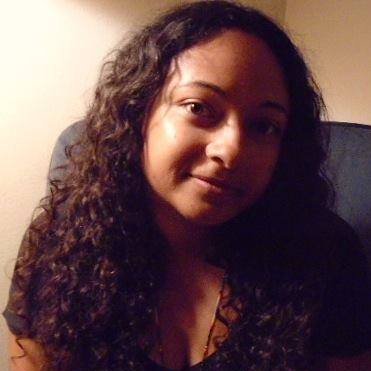
Terria Smith is a tribal member of the Torres Martinez Desert Cahuilla Indians and a proud original Californian. She is the editor of News from Native California magazine and director of the Berkeley Roundhouse, Heyday’s California Indian publishing program. Smith is also the editor of the 2023 anthology Know We Are Here: Voices of Native California Resistance. She received her undergraduate degree at Cal Poly Humboldt (formerly Humboldt State University) and earned her master’s degree at the UC Berkeley Graduate School of Journalism.
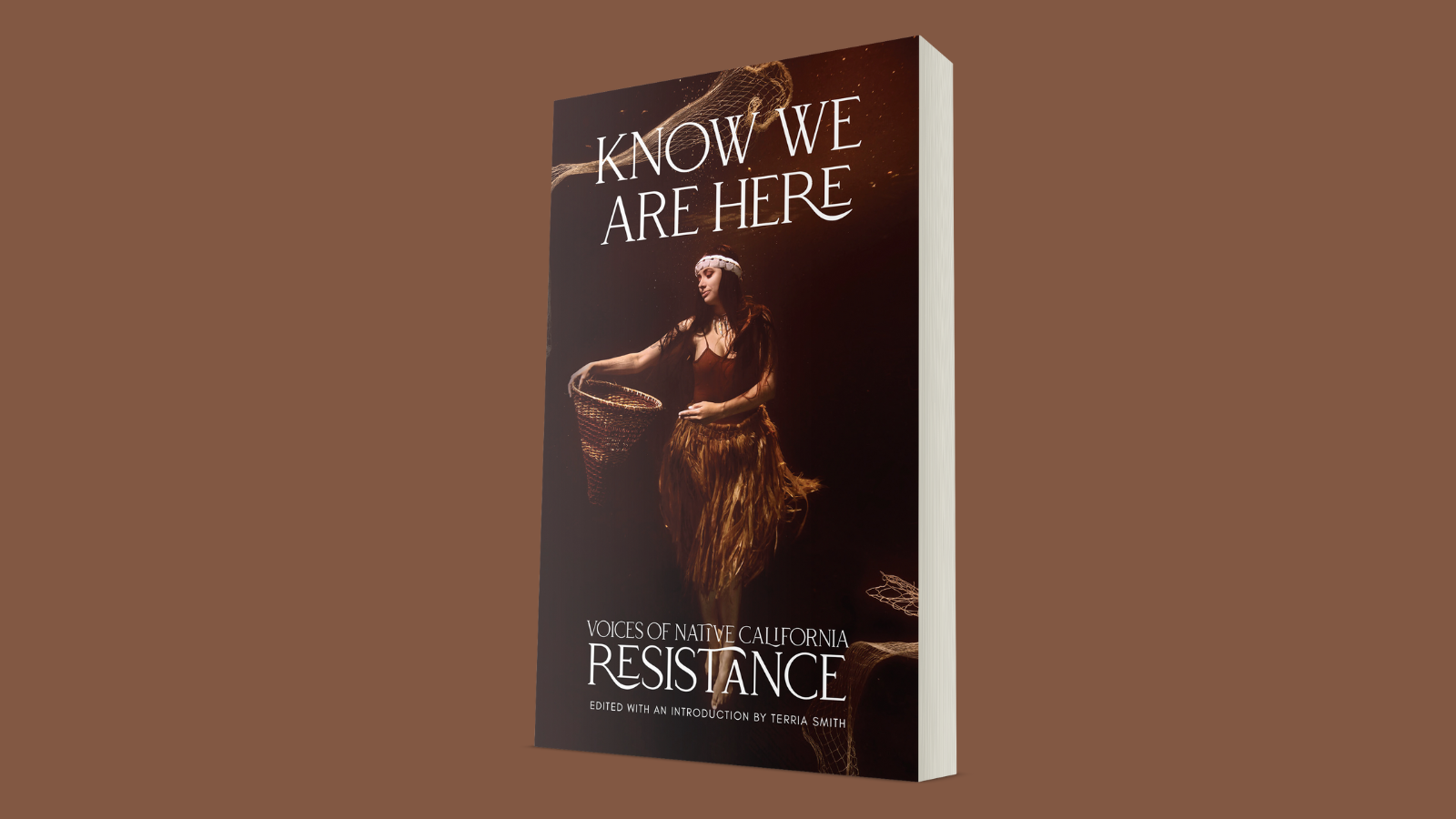
Debuts June 2023 — Know We Are Here
FOR IMMEDIATE RELEASE
Know We Are Here Surveys Indigenous California’s Resistance to Colonial Hegemony
In this anthology, leading voices of California Native Nations unearth undertold histories and critiques of US colonialism, Western pedagogy, environmental mismanagement, and more.
BERKELEY, CALIF.—From the voices of more than 20 California Indian writers, activists, and leaders, Know We Are Here: Voices of Native California Resistance (out June 27) is a powerful collection that details how California’s Indigenous communities are resisting the legacies of colonial dispossession, violence, and genocide. Encompassing five sections—from “Histories of Resistance” to meditations on “Place, Nature, and Wellness—the book covers a variety of the dynamics and challenges facing Native Californian communities today, and offers a well of urgent wisdom.
With over 600,000 Native Americans residing in California, the state is home to more Native tribes than any other in the country—despite waves of colonization, from the West’s brutal Missions system to latter centuries’ Manifest Destiny fervor. Incorporating voices from elders as well as the rising generation, this collection unpacks traumas perpetuated through mis-education; underscores the political import of age-old Indigenous teachings; explores land rematriation, water protection, and sustainable stewardship; and traces the intersections of Native struggle with other racial justice movements.
Through essays, excerpts, interviews, and manifestos drawn from Heyday’s decades-strong quarterly magazine News from Native California and books published under Heyday’s Roundhouse program, the many striking voices in this volume include Bad Indians author Deborah A. Miranda (Costanoan-Ohlone Esselen Nation), tribal leader Greg Sarris (Coast Miwok/Southern Pomo), Professor Rose Soza War Soldier (Mountain Maidu/Cahuilla/Luiseño), Indigenous rights and food activist Vincent Medina (Chochenyo Ohlone), and the Save California Salmon coalition—among many others.
“I have learned that resistance takes many different forms,” says volume editor Terria Smith (Torres Martinez Desert Cahuilla), Director of Heyday’s Roundhouse program; “At times we have to take to the streets to protect our environment and defend sacred sites. […] Tribal historians look into archives in search of our true stories. Some of us even venture outside of our homelands to find solidarity and commonality with other oppressed peoples. This book takes a look at all of these types of resistance.”
Media Contact:
Kalie Caetano
Marketing & Publicity Manager
For review copies, feature interest, and interview and image requests, get in touch: publicity@heydaybooks.com
Keep up with Heyday on social:
Terria Smith is the editor of News from Native California magazine and director of the Berkeley Roundhouse, Heyday’s California Indian publishing program. She is a tribal member of the Torres Martinez Desert Cahuilla Indians in Southern California and an alum of the UC Berkeley Graduate School of Journalism.
About the Contributors
Deborah A. Miranda is an enrolled member of the Ohlone/Costanoan-Esselen Nation of the Greater Monterey Bay Area in California, with Santa Ynez Chumash ancestry. She is the author of Bad Indians: A Tribal Memoir, published by Heyday in 2013. She is also the author of four poetry collections and coeditor of Sovereign Erotics: A Collection of Two-Spirit Literature. She earned her Ph.D. in English literature from the University of Washington in Seattle and was professor of English at Washington and Lee University, where she taught literature of the margins and creative writing. She retired from her professorship in 2021 to focus on scholarship and poetry involving California mission history and literatures. She and her spouse, writer Margo Solod, live in Eugene, Oregon, a short distance from her homelands in California.
Greg Sarris is currently serving his fifteenth term as chairman of the Federated Indians of Graton Rancheria. His publications include Keeping Slug Woman Alive (1993), Mabel McKay: Weaving the Dream (1994, reissued 2013), Grand Avenue (1994, reissued 2015), Watermelon Nights (1998, reissued 2021), How a Mountain Was Made (2017, published by Heyday), and Becoming Story (2022, published by Heyday). Greg lives and works in Sonoma County, California. Visit his website at greg-sarris.com.
Michael Connolly Miskwish (Campo Band of Kumeyaay) served for seventeen years in elected office for the Campo Kumeyaay Nation and helped establish and directed one of the first tribal environmental protection agencies in the United States. Michael has researched and implemented traditional environmental practices in contemporary land and resource management and worked on environmental policy for the National Congress of American Indians, National Tribal Environmental Council, and several EPA advisory committees. He is adjunct faculty of American Indian studies at San Diego State University, and his work on issues of taxation policy and impediments to sustainable tribal economies is nationally recognized. He has published two books on Kumeyaay history and one on Kumeyaay cosmology.
Deborah Dozier is the author of The Heart Is Fire: The World of the Cahuilla Indians of Southern California, published by Heyday in 1998.
Rose Soza War Soldier (Mountain Maidu/Cahuilla/Luiseño) is an enrolled member of the Soboba Band of Luiseño Indians. She completed a B.A. in history with a double minor in political science and social/ethnic relations at UC Davis and a Ph.D. in history with an emphasis in American Indian history from Arizona State University. She is a faculty member in the ethnic studies department at California State University, Sacramento. Her research and teaching focus on twentieth-century American Indian activism, social and cultural history, politics, education, and justice-centered movements.
Jayden Lim is an award-winning Pomo activist and leader who currently serves as a tribal youth ambassador for the California Indian Museum and Cultural Center, located in Santa Rosa. She is currently an undergraduate student at Stanford University and is pursuing two majors: Comparative Studies in Race and Ethnicity with a focus on politics, policy, and equity; and History with a focus on American Law. Apart from this, she is skilled in GIS software, business planning, Pomo language documentation, and graphic design, and she is a DJ on the side. She is passionate about food sovereignty, Missing and Murdered Indigenous Women, education, and criminal justice.
River Garza is an artist from Los Angeles, California, whose work draws on traditional Indigenous aesthetics, Southern California Indigenous maritime culture, skateboarding, graffiti, Mexican culture, and lowrider culture.
Rose Ramirez (Chumash/Yaqui descent) is an artist, basketweaver, photographer, and educator. She is a coauthor of Ethnobotany Project: Contemporary Uses of Native Plants of Southern California and Northern Baja California Indians (bilingual English/Spanish edition, Malki Museum Press, 2018). She is also one of the producers and directors of the 2022 documentary Saging the World.
Deborah Small is an artist, photographer, and professor emerita at California State University, San Marcos. With Rose Ramirez she is a coauthor of Ethnobotany Project as well as a coproducer and codirector of Saging the World.
Cutcha Risling Baldy is an assistant professor of Native American studies at Cal Poly Humboldt. Her research is focused on Indigenous feminisms, California Indians, environmental justice, and decolonization. Her book We Are Dancing for You: Native Feminisms and the Revitalization of Women’s Coming-of-Age Ceremonies, published by University of Washington Press in 2018, was awarded Best First Book in Native American and Indigenous Studies at the 2019 Native American and Indigenous Studies Association conference. She received her Ph.D. in Native American studies with a designated emphasis in feminist theory and research from the University of California, Davis, and her M.F.A. in creative writing and literary research from San Diego State University. She also has a B.A. in psychology from Stanford University. She is Hupa, Yurok, and Karuk, and is an enrolled member of the Hoopa Valley Tribe in Northern California.
Michelle L. LaPena (Pit River Tribe) is a mother of three and Indian law attorney. She has lectured at primary, secondary, and university levels and published a number of essays and nonfiction and law review articles on topics related to California Indians and federal Indian law. She received her B.A. in 1993 and her J.D. in 1998, both from the University of California, Davis. In 2017 she received her M.F.A. in creative writing at the Institute of American Indian Arts and she is a recipient of the 2015 Truman Capote Creative Writing Fellowship and the American Indian College Fund’s Full Circle Scholarship.
Save California Salmon is dedicated to protecting and restoring the Salmon, Klamath, Trinity, Sacramento, Eel, and Smith Rivers, through restoring flows and salmon habitat, removing dams, and improving water quality; fighting new threats to rivers such as new dams, diversions, and pipelines; and empowering people to fight for rivers and salmon.
Viola LeBeau (Hammawi Band of the Pit River Nation; Cahuilla/Maidu/Cheyenne River Sioux descendent) is a visual multimedia artist and advocate of traditional knowledge. She received her B.A. in sociology and studio arts from Mills College and now works on community outreach, directorial assistance, and food distribution issues with Sogorea Te’ Land Trust.
Olivia Chilcote is a member of the San Luis Rey Band of Mission Indians and an assistant professor of American Indian studies at San Diego State University. She earned her Ph.D. and M.A. in ethnic studies at UC Berkeley and her B.A. in ethnic and women’s studies at Cal Poly Pomona. Her research and teaching focus on the areas of interdisciplinary Native American studies, California Indian history, federal Indian law and policy, and Native American identity. She grew up in the center of her tribe’s traditional territory in the North County of San Diego and she is active in tribal politics and other community efforts. She was a first-generation college student and the first person in her tribe to earn a Ph.D.
Chris Medellin and his family are from the Tule River tribe of Yokuts of central California. Raised in San Diego, as a first-generation college student he earned a bachelor’s degree in television, film, and new media and American Indian studies and a master’s degree in postsecondary educational leadership with a specialization in student affairs, both from San Diego State University (SDSU). He is currently pursuing a Ph.D. in education at SDSU and Claremont Graduate University. After working his way through various roles on campus, including student assistant, administrative support, and outreach coordinator, he currently serves as the inaugural director of the SDSU Native Resource Center. He is also president of the American Indian Alumni Chapter of San Diego State and founding member of SDSU’s Native American and Indigenous Faculty Staff Association and the Men of Color Alliance.
Maura Sullivan (Coastal Band of the Chumash Nation, Slek’en hi šišilop) is from Ventura. She is currently a Ph.D. student in the linguistics program at Tulane University in New Orleans and earned a bachelor’s degree in art history and Native American studies from UC Berkeley in 2012.
Vincent Medina (East Bay Ohlone) is a cofounder, with Louis Trevino, of the community organization mak-‘amham/Cafe Ohlone. From 2013 to 2016 he was the Roundhouse outreach coordinator for Heyday and News from Native California.
Emily Clarke is a Cahuilla writer, bead artist, activist, cordage instructor, and traditional bird dancer. In her free time Emily runs her small business, Cahuilla Woman Creations, performs her work at various events, and coedits her literary journal, Rejected Lit. She is the 2022–23 Graton Roundhouse intern for Heyday and News from Native California.
Vanessa Esquivido (Nor Rel Muk Wintu/Hupa) is an assistant professor of American Indian studies at CSU Chico.
Maya Esquivido (Nor Rel Muk Wintu/Hupa) is a teaching and curriculum design fellow at Seattle Central College. She has a master’s of social work, with a graduate certificate in American Indian and Indigenous studies, from the University of Washington.
Morning Star Gali (Ajumawi Band of Pit River) is the project director at Restoring Justice for Indigenous Peoples (www.indigenousjustice.org).
Ursula Pike is a graduate of the M.F.A. program at the Institute of American Indian Arts and the author of An Indian among los Indígenas: A Native Travel Memoir (Heyday, 2021). Her work won the 2019 Writers’ League of Texas Manuscript Contest in the memoir category and her writing has appeared in Literary Hub, Yellow Medicine Review, World Literature Today, and Ligeia Magazine. She has an M.A. in economics, with a focus on community economic development, and was a Peace Corps volunteer in Bolivia from 1994 to 1996. An enrolled member of the Karuk Tribe, she was born in California and grew up in Daly City, California, and Portland, Oregon. She currently lives in Austin, Texas.
Cindi M. Alvitre is a mother and grandmother and has been an educator and artist-activist for over three decades. She is a descendant of the original inhabitants of Los Angeles and Orange Counties. In 1985 she and Lorene Sisquoc cofounded Mother Earth Clan, a collective of Indian women who created a model for cultural and environmental education. In the late 1980s she cofounded the Ti’at Society, sharing in the renewal of ancient maritime practices of the coastal and island Tongva. She is the author of the children’s book Waa’aka’: The Bird Who Fell in Love with the Sun (Heyday, 2020). She currently teaches American Indian studies at California State University, Long Beach.